
6 Ways to Weatherproof Your Canvas Cottage: Lessons from Mystic Quarry

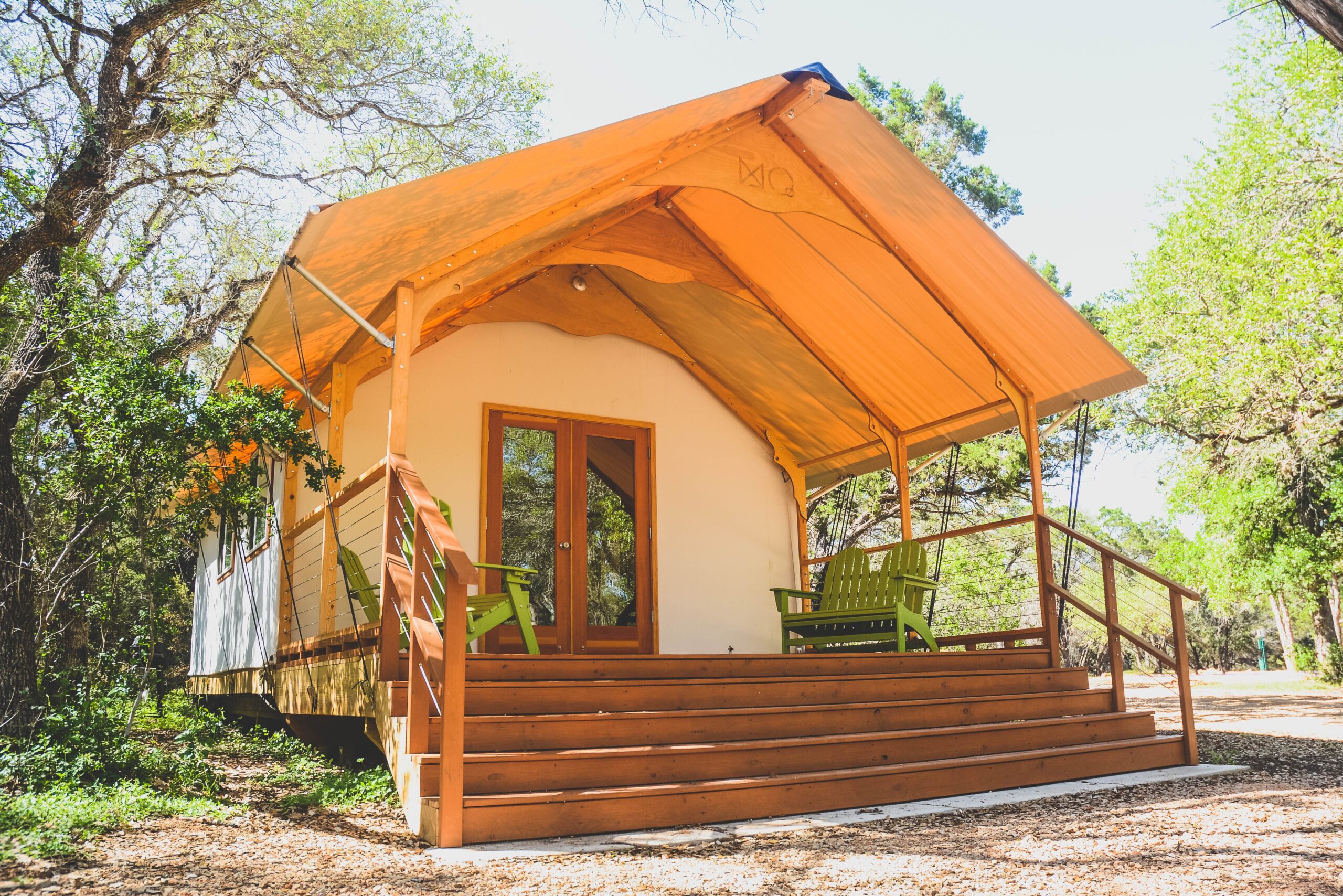
We teamed up with our friends at Mystic Quarry in Canyon Lake, Texas, to share some of their innovative weatherproofing strategies for their canvas cottage glamping units.
Many of our customers ask how to best protect their canvas cottages against various weather conditions, including high winds, flooding, heavy rain, extreme heat, and mild snow. Applying fabric waterproofing treatments and sealing seams are general ways to improve weatherproofing. As you plan your glamping business, consider the strategies utilized by Mystic Quarry.
Step One: Concrete Foundation
While there are many foundation designs suitable for off-grid glamping, it’s crucial to consider the soil you’re building on.
Mystic Quarry opted for a solid concrete pad framed with 2” x 4” inch wood boards for siding. To prepare for potential flooding, they took an innovative step: they dropped the bathroom space by 6” and covered it with tile, a clever way to prevent flood damage to standing structures in the Texas climate.
Step Two: Wood Walls
Our canvas cottages are constructed with 100% fire-resistant and breathable cotton Army Duck canvas. This material is a tightly woven cotton that naturally swells when wet, making the tent more water-repellent. The breathable fibers also help regulate temperature, keeping the interior cooler in summer and warmer in winter.
Mystic Quarry enhanced this by adding decorative wood panels inside the cottage. These panels cover the bottom half of the canvas walls. Made of burnt pine and stained for a rustic look, this unique approach seems to work great for their guests.
Step Three: Double-Pane Windows
Mystic Quarry chose our double-pane window option for their Safari Lodges.
A double-pane window uses two panes of glass separated by a small air pocket. Double-pane windows improve insulation and help maintain interior temperatures by reducing heat loss/gain and preventing drafts, which can be helpful in more extreme temperatures.
Step Four: Durable Rain Fly
Every canvas cottage comes equipped with a 15 oz. vinyl rain fly. This tough material offers superior resistance to harmful UV rays and heavy rain.
The rain fly is held taut using adjustable brace bars and ratchets. This addition is vital in keeping heavy rain off the Army Duck canvas roof and shielding the canvas from extreme heat. Rain flies add an extra layer of protection, helping to divert rain away from the roof and walls.
Step Five: Canvas Curtains
The team at Mystic Quarry continues to be innovative! They installed Army Duck canvas drapes on each window. They requested these window curtains to serve as an optional layer for their guests. As mentioned, the breathable canvas helps keep the interior cooler in the summer and warmer in the winter.
Step Six: Using Stove Jack for Stoves and AC
Each canvas cottage includes a stove jack, typically used to route a stovepipe. However, the intense Texas heat required a different solution. Mystic Quarry brainstormed and decided to use the stove jack for a wall-mounted AC unit. This shows that stove jacks can be modified for portable AC units, providing an access point for ventilation. Combined with a fan at the front of the cottage, guests can stay comfortable throughout their entire stay.
Key Insight: Mystic Quarry noted that most glamping sites must close during parts of the summer due to warm weather. Thanks to their innovative AC solution, they’ve been able to stay open all season long.
The Final Look: Tex-Mod Style
Mystic Quarry created glamping units that look more like log cabins to fit the architecture of their resort. They describe the look and feel of the Safari Lodges as (Tex-Mod) Texas Modern: a rustic, steel, large-window, and open-airy living space.
The large porch, rain-fly extension, burnt pine walls, elevated deck, and french doors create the perfect surrounding for a cozy, upscale outdoor living experience.
Ready to explore how Rainier can help transform your property? Start your Design-to-Build journey today.